🥫 Why is steam sterilization the top choice for tinplate cans?
Open a can of fermented black beans with fish, canned peaches, or luncheon meat, and it can sit at room temperature for two or three years without going bad - that sense of security comes half from the tinplate's sealed armor and half from the 121°C heat dancing inside the sterilization kettle.
But many factory managers get stuck choosing the type: spray, water bath, or steam - which one really suits tinplate cans?
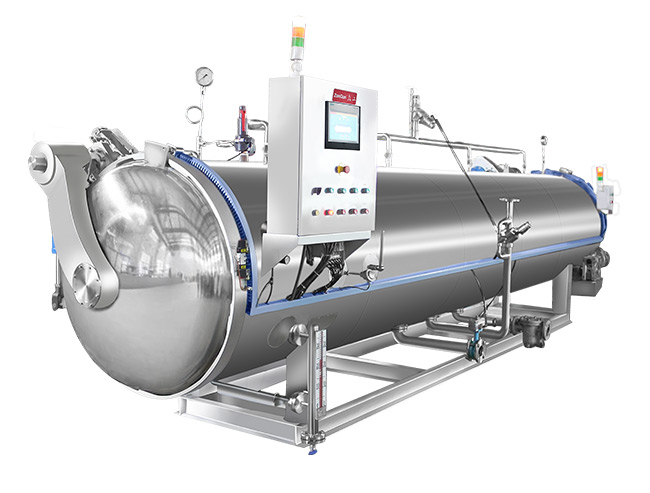
One-line conclusion: Tinplate cans are sturdy and pressure-resistant, and steam sterilization is the fastest, most efficient, and most fitting option. 👇
🔍 Logic first: Choosing a sterilizer = Considering the type of packaging
Different package types have hugely different "pressure tolerance":
- Soft packaging (marinated bags, boil-in-bags) → prone to breaking, must use spray sterilizer for precise backpressure control
- Glass jars (sauces, jams) → prone to lid popping or shattering, choose spray or water bath for even heat distribution
- Tinplate cans (canned food, beer, pet meals) → rigid containers, can handle internal and external pressure differences, steam sterilization works directly
Tinplate cans don't mind bulging and don't need complicated backpressure control systems - this means the equipment can ditch things like water circulation pumps and spray nozzles, making it simpler, cheaper to build, and easier to maintain.
⚡ Why steam sterilization wins for tinplate cans
1. Direct steam injection, fast heating
Saturated steam hits the can body and instantly condenses, releasing huge latent heat, conducting heat faster than hot water. Typical conditions: 120–130°C / 1.0–1.5 MPa, about 30 minutes per batch, short cycle, high output.
2. Even heat distribution & energy recovery
With a flow-guiding design, temperature differences in the kettle can be kept within ±0.5°C. Adding an energy recovery system lowers energy consumption compared to traditional water sterilization.
3. Simple structure, cheap maintenance
No worrying about nozzle clogs or water pump wear. Tinplate cans are tough, so equipment downtime is much lower - in the long run, more cost-effective than spray sterilization.
4. Backpressure can be applied, meat doesn't panic
High-protein cans (like luncheon meat or fish) can bulge during cooling due to high internal pressure. Steam sterilizers can add backpressure to balance inside and outside pressure, preventing lid popping and deformation. sunny 8615169670012


 English
 中文简体
中文简体